
Female Hormone Specialist in Plymouth
Helping Women Understand Their Hormones
Contact Our Team Today
We aim to get back to you in 24 hours.
Hormones influence periods, fertility and the transition through perimenopause and menopause, but symptoms that feel “hormonal” can have very different causes. Changes in periods, for example, can be associated with perimenopause, stress, weight changes, contraception, thyroid problems and conditions such as PCOS.
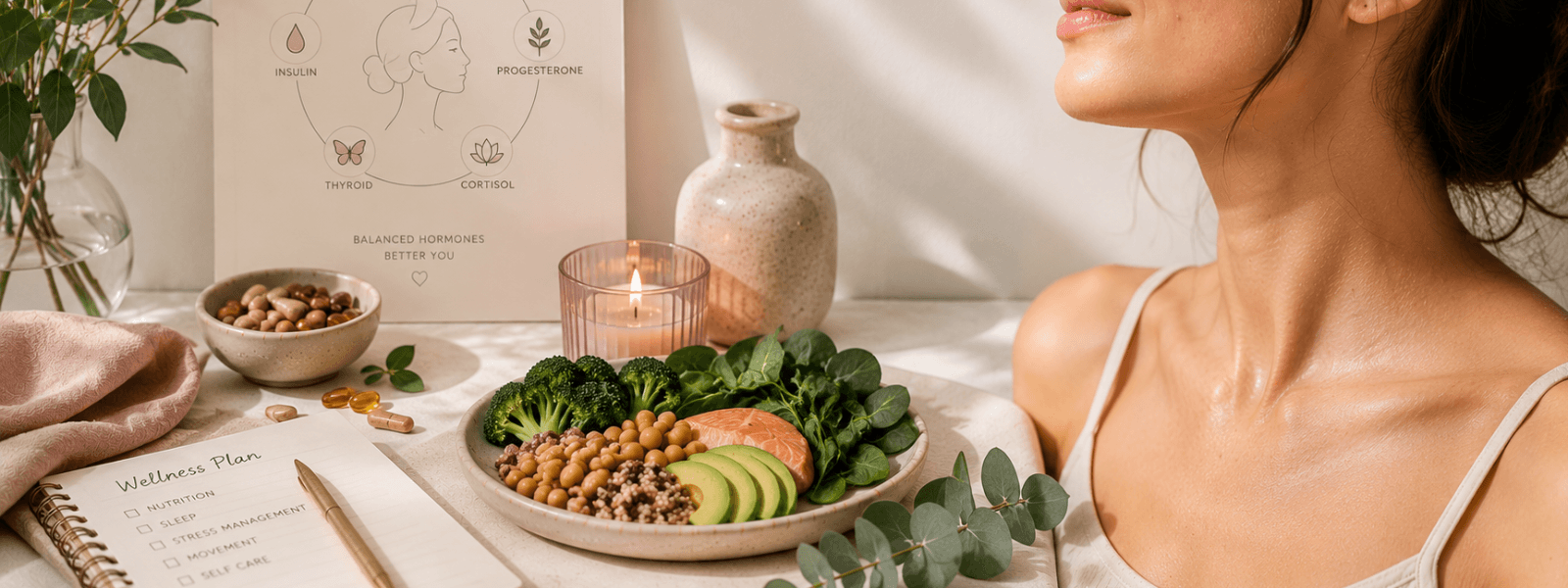
Our female hormone support in Plymouth takes a nutrition-focused approach. We help you understand where food and lifestyle can contribute to your wider health without promising to diagnose hormonal conditions or “rebalance” your hormones through diet.
Contact Our Team Today
What Has Brought You Here?
There isn't one typical reason to look for female hormone support.
You might have noticed changes around your menstrual cycle. Perhaps you've recently been diagnosed with PCOS. You could be trying to conceive, approaching perimenopause or simply finding that the nutrition advice you've read online doesn't seem relevant to you.
Women's health nutrition can span areas including PCOS, reproductive health, fertility, premenstrual disorders and menopause.
That's why we don't begin every consultation in Plymouth with the same hormone diet.
We begin with your situation.
Periods Can Tell Part of the Story
Changes to your menstrual cycle are worth paying attention to.
Some variation is normal, but if your usual pattern changes significantly, periods become persistently irregular or you experience other unexplained symptoms, it's sensible to speak to your GP.
Nutrition support doesn't replace that investigation.
What we can do is look at the nutritional side of the picture: what you're eating, whether your diet has become restrictive, your meal routine and whether you're getting a good variety of nutrients from everyday food.
A Typical Day Is More Useful Than a Perfect Meal Plan
Rather than showing us your healthiest day, we'd rather know what a normal Tuesday looks like.
What do you eat before work?
How long is it until lunch?
Do you regularly skip meals?
What does dinner normally contain?
Are there foods you've stopped eating because you've heard they're “bad for hormones”?
These details help shape your female hormone nutrition support in Plymouth.
Sometimes the useful changes are fairly ordinary: making breakfast more substantial, improving protein across the day, eating a greater variety of plant foods or reviewing whether an existing restriction is still necessary.
Get in touch with a specialist
PCOS, Fertility or Perimenopause? The Priorities Change.
A woman with PCOS isn't necessarily going to need the same nutritional approach as someone experiencing perimenopause.
Likewise, someone preparing for pregnancy has different considerations from somebody whose priority is maintaining bone and cardiovascular health through menopause.
For that reason, our approach in Plymouth changes with the circumstances.
PCOS: nutrition and lifestyle can form part of wider management, while medical care remains important. The NHS notes that the condition can affect periods, fertility, hair growth, skin and mood.
Fertility: nutrition can support preconception health, but food cannot guarantee conception or treat every cause of infertility.
Perimenopause and menopause: nutritional priorities may increasingly include areas such as protein, calcium, vitamin D, fibre and overall dietary quality. Menopause symptoms and their severity vary considerably between individuals.
The label might be “hormone health”, but the nutrition underneath it needs to be much more specific.
Be Wary of the Hormone Shopping List
There is a familiar pattern online:
Buy this supplement.
Stop eating that food.
Drink this powder.
Follow this detox.
Then your hormones will supposedly be “balanced”.
Human hormones don't work like a set of scales that can simply be corrected by eating a particular ingredient.
If you're already taking supplements, bring that information into your consultation. We can consider what you're using alongside your normal diet rather than automatically adding more products.
Our female hormone nutrition support in Plymouth is deliberately food-focused and avoids making promises that nutrition cannot reliably deliver.
When Medical Advice Comes First
Some concerns need investigation rather than a new eating plan.
Speak to your GP if your periods have become irregular, you've missed several periods, you're struggling to become pregnant or you're experiencing other unexplained symptoms alongside menstrual changes.
Likewise, if perimenopause or menopause symptoms are having a significant effect on everyday life, medical treatments and support are available.
Working with a female hormone specialist in Plymouth for nutrition should complement appropriate healthcare, not compete with it.
Your Plymouth Nutrition Consultation
Consultations are available online to clients across Plymouth and the surrounding area.
Instead of receiving a generic “hormone balancing” meal plan, you'll have the opportunity to talk through what has actually been happening, what you're eating now and what you've already tried.
From there, we can decide where nutrition genuinely has a role and concentrate on a handful of changes worth making.
That may look completely different for two women of the same age — and that's exactly the point.
speak with our team today
What People are Saying About Us
★★★★★
"I finally received advice that considered my stage of life and my individual diet together."
Danielle R.
South West
★★★★★
"Everything felt tailored rather than being another generic hormone programme."
Beth P.
South West
★★★★★
"A calm, practical approach that helped me understand what I could realistically change."
Lauren C.
South West
★★★★★
"I left the consultation feeling informed and clear about my next steps."
Samantha H.
South West
Our Locations
Looking for our services in another area in Devon? We are proud to work nationally across the UK, allowing us to ensure we can provide our specialist Female Hormone Specialist services to you.
For a full list of locations we cover in Devon, see below.